

Uganda Prisons Service has clarified the legal process through which convicted prisoners may be granted a presidential pardon, emphasizing that the authority to forgive offenders rests solely with the President.
Addressing journalists on Monday, spokesperson, Frank Baine said there is a common misconception that the Commissioner General of Prisons grants pardons which he demystified.
“People often think that the Commissioner General is the one who forgives or grants pardons. That is not correct. To understand what a pardon means, who grants it, and why, we must refer to the Constitution of Uganda," he said.
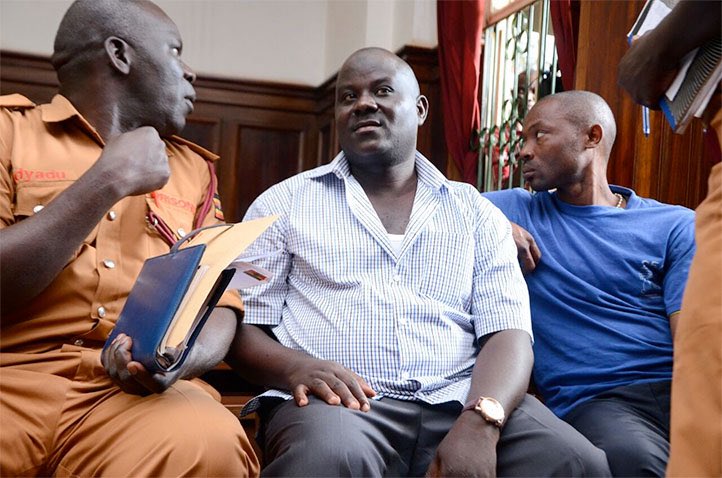
The explaination comes in the wake of a pardon by President Museveni to Pine Car bond murder convict, Muhammad Ssebuwufu who was released last week.
Ssebuwufu was convicted in 2019 for the kidnap, aggravated robbery, and murder of a client, Betty Donah Katusabe,before he was sentenced to 40 years by the High Court.
The sentence was however reduced to 18 years on appeal.
Following his pardon on Friday, tongues started wagging over the matter.
Speaking on Monday, Prisons spokesperson explained that pardoning of convicts is done under Article 121 of the Constitution which provides for an Advisory Committee on the Prerogative of Mercy.
“The committee is chaired by the Attorney General and consists of six prominent citizens appointed by the President. The Commissioner General is not a member of this committee,” he said.
Quoting the constitutional provisions, Mr. Baine noted that the President may, on the advice of the committee, grant a convicted person a pardon either free or subject to lawful conditions; grant a respite from the execution of a punishment; substitute a less severe form of punishment; or remit the whole or part of a punishment, penalty or forfeiture due to government.
“The power to grant forgiveness and pardon rests exclusively with the President,” he emphasized. “No one else has that authority, and it is exercised on the advice of the Advisory Committee on the Prerogative of Mercy.”
Baine further explained that there are two main channels through which a pardon may be pursued.
“The first is through a petition by the lawyers of a convicted person. Strictly speaking, pardon is for convicted prisoners. Remand prisoners are not covered under this arrangement,” he said.
According to Mr. Baine, once a petition is received, the President forwards it to the committee.
“The committee then requests a specific report from the Commissioner General of Prisons regarding the inmate’s discipline and conduct before advising the President accordingly,” he said.
The second channel, he noted, is the routine submission of names of prisoners who qualify under established criteria.
“There is a normal process where names are submitted for consideration. These fall into two categories: capital offenders and minor offenders,” he said.
“For capital offenders who have been sentenced to death and have completed the appeal process, their names are submitted at least once a year, accompanied by a report indicating remorse and good conduct. Those serving long sentences who are remaining with six months to complete their sentence may also be included.”
On minor offenders, he said those who have completed three-quarters of their sentence are eligible for consideration.
“Pregnant or breastfeeding mothers who have completed 50 percent of their sentence can also be put on the list. The terminally ill who have served half of their sentence and elderly inmates aged 65 and above who have completed 50 percent of their sentence are equally eligible,” he added.
He stressed that every name submitted must be supported by a detailed report.
“Each individual placed on the list must have a report on discipline and remorsefulness. The committee sits, assesses each case, and advises the President accordingly,” he said.
